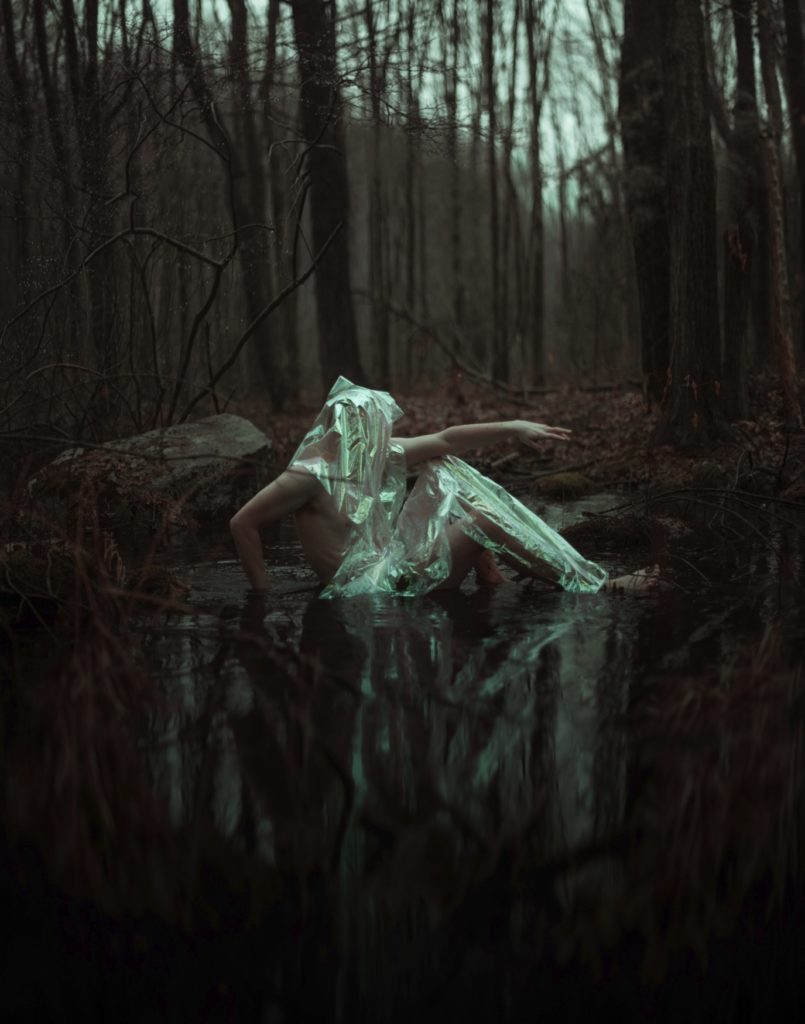
The Anima: four closet dramas
<p>Although a “closet drama” is by definition a play meant to be read rather than performed, this does not preclude an attempt at staging the anima. Unlinking “closet drama” from its primary theatrical definition in this way frees up other connotations for “closet drama” as well, which I think serves the plays. “Anima,” Latin for soul or vitality, is also Jung’s word for emergent femininity.</p> <p>If we proceed towards a performance, anything in italics should be considered a stage direction, even if it seems to interrupt speech. These directions should be taken seriously and enacted wherever possible (through set, lighting, audio, projections). Where they seem impos- sible to literally enact, please use your imagination and the power of suggestion. As Sara Ruhl (a playwright) writes: “I wonder if by putting ceilings on our stages we are trying to compete with film in a way that will make us automatically fail, making our stages smaller, and making our connection with the sky historical.” Or as Lyn Hejinian (a poet) writes: “It is only the mind, with its heart, that recognizes immaterial things; the senses are incapable of doing so.”</p> <p><em>The Anima</em> is a special case because of its conceit, which literalizes the presence of stage directions. I can imagine a production in which the stage directions are speech-acts—that is, there is no set or props, and everything happens only inasmuch as saying it makes it happen. (I can also imagine a production of all of these with this set-up.) A different approach might direct actions to occur simultaneously with the speaking of their direction.</p> <p>If performed as a suite, five actors are ideal: Lydia doublecast as Repression, Crescentia doublecast as When’s Suddenly, everyone taking on a voice in “The Revenants.” “Mother” should be a singular actor, voiced by someone behind the scenes—the playwright, if available, or the director, or a stagehand. The aim is not authenticity. The sixth, seventh, eighth, and ninth voices might, if possible, be passed out to willing audience members to voice.</p> <p>And—for a long time I thought of these as (only) poems.</p>
Authors: S. Brook Corfman
Part of: Gauss PDF