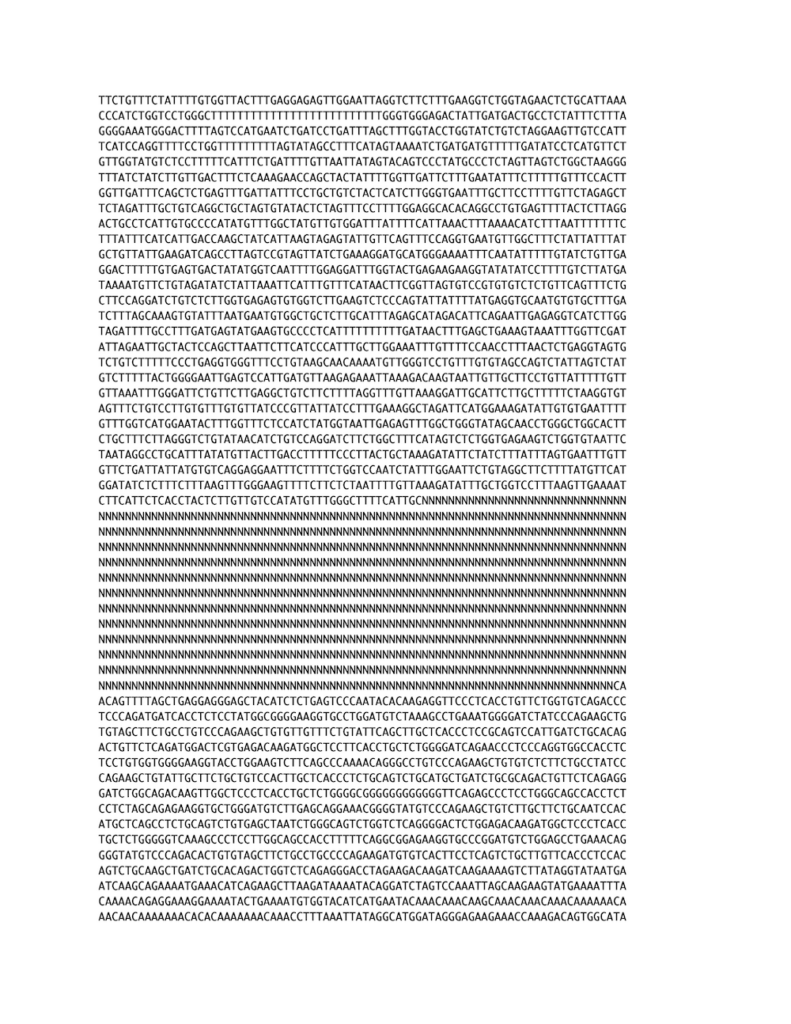
Mus musculus, GRCm38 primary reference assembly
<p>MISC NOTES >></p> <p>The <em>Mus musculus</em> (house mouse) genome is comprised of 21 chromosomes.</p> <p>PDFs derived from the publicly available primary assembly for <em>Mus musculus</em>, GRCm38, released by the Genome Reference Consortium in January, 2012, and subsequently used by UCSC to create the mm10 database available on ensemble.org.</p> <p>The GRCm38 primary assembly is made up of 3,480,955,279 nucleotide base pairs, which collectively code some 23,148 genes, on nineteen chromosomes (pp. 1 — 709,409 pp.) as well as the sex chromosomes X and Y (terminal 75,257 pps.).</p> <p>The 13th chromosome alone is comprised of over 120 million nucleotide base pairs that code 1,572 genes. Many notable proteins are translated from information contained on this chromosome: msh homeobox 2; dopamine receptor D1A; MAD homolog 5. The ryanodine receptor 2, or RYR2, functions to supply calcium to cardiac muscle. Lysosomal trafficking regulator is a transport protein that, when mutant, results in Chédiak–Higashi syndrome, a cellular decrease in phagocytosis (the process by which a cell engulfs and isolates solid particles). The angiotensin II receptor, type 1a is a G-protein coupled receptor with vasopressor effects, namely within the cardiovascular system. A protein called endothelin 1 releases a peptide vasoconstrictor; in humans the EDN1 gene ortholog is located on chromosome 6. Spleen tyrosine kinase, aka Syk, is a member of the enzyme family of tyrosine kinases. Mice that lack Syk die during embryonic development of severe defects in the lymphatic system.</p>
Authors: Peter Nowogrodzki
Part of: Gauss PDF