Scorched Earth
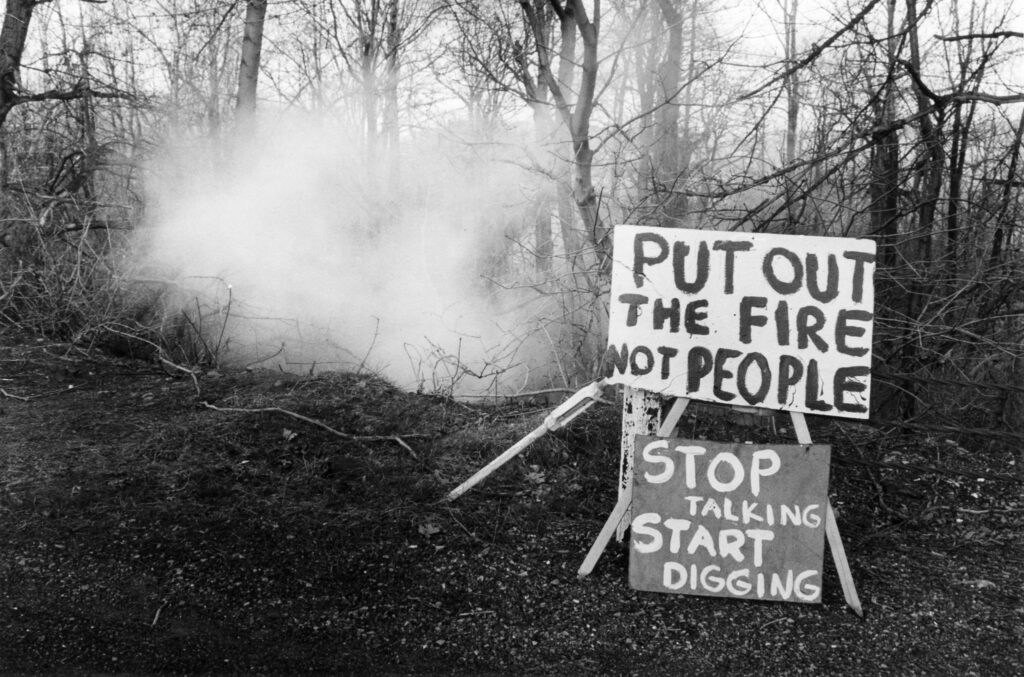
<p>The story of Centralia teaches us the interrelatedness of cultural, social, and political agents and the long-lasting environmental impacts of resource extraction for the sake of economic growth. Seams of anthracite coal below Centralia extend far beyond the limits of the borough. The process of mining should be considered an act of underground urbanization, which impacts nature and the environment to a degree we are just now beginning to understand. Only a few boreholes remain as visual markers of the environmental tragedy. These hypodermic needles provided information to scientists about the environmental conditions of the coal veins. Today, most of them are difficult to locate, buried underneath a dense layer of vegetation and debris. The two urban systems are intimately related. Unexpected subsidence, smoke emanating from the ground, and abnormally high soil temperatures are only the specters of extinct industries. They rhythmically remind us how intimately dependent we are on the geological formations underneath, but oblivious to the impacts. Our proposal offers a retrospective reminder of the unimagined consequences of human activities. The act of consuming energy from below to filter the fumes of an ongoing subterranean fire becomes a deeply political act, creating a sphere for civic engagement and memory.</p>
Authors: Marc Miller, Laia Celma, Pep Avilés, Miranda Esposito
Contributors: Aletta Filipiddou, Kenneth J. Davis, Jeffery L. Kohler, Natasha Miles, Jorge García, Giovanna de Caneva, Ruth Ponce, Adrianna Mas, Marcos Sobreviela
Designer: Ariadna Serrahima, Katharina Hetzeneder, Diego Bustamante
Video Producer: Sadra Tehrani
Digital Images: Graph Visual Studio, José Hevia , Josep X. Tulleuda Nieto
Consultant: David DeKok
Copy Editor: John Wriedt
Miranda Esposito, Marc Miller, Laia Celma, Pep Avilés
Part of: Enough: The Architecture of Degrowth